
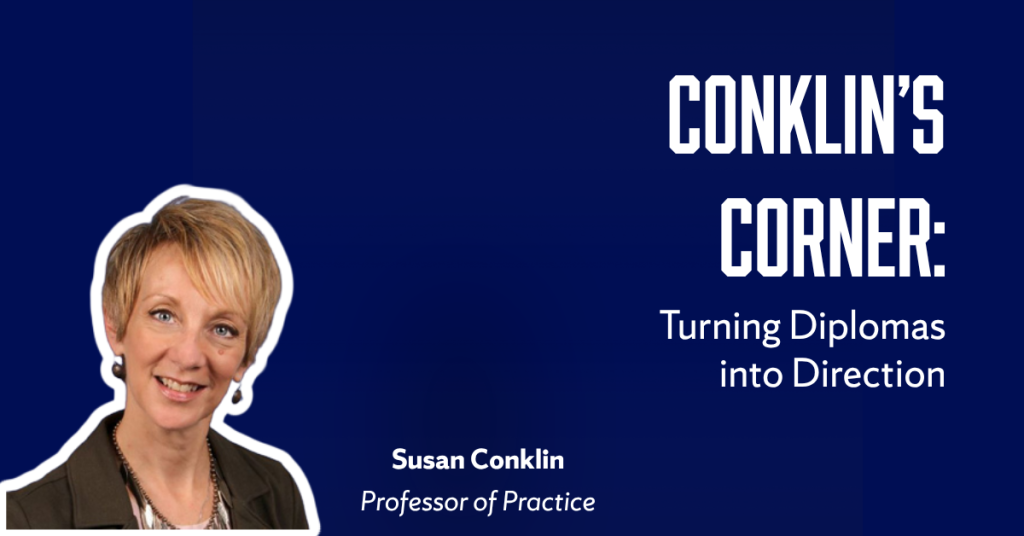
Transitioning from college to career comes with excitement, uncertainty, and a lot of unanswered questions. From finding your footing in the workplace to figuring out what growth really looks like early on, many graduates wonder if they’re on the “right” path.
In this Q&A with Susan Conklin, we explore practical guidance on building momentum, continuing your education, and growing professionally without burning out. Whether you’re just starting out or reassessing your next move, these insights will help you move forward with intention and confidence.
1. How do I keep from getting “stuck” in my career?
Getting your foot in the door and becoming established is an accomplishment. Pause and recognize that. Getting “unstuck” doesn’t mean racing forward; it means staying intentional.
Pay attention to what you’re learning, who you’re learning from, and how your work aligns with your longer-term goals. Look for opportunities to stretch just beyond your comfort zone, even in small ways. Ask for feedback, volunteer for projects that build transferable skills, and keep reflecting on what energizes you versus what drains you. Momentum comes from curiosity and reflection, not urgency.
2. How do you know when you’re actually building momentum early on versus just staying busy?
Busy fills your calendar; momentum moves you forward. Momentum feels purposeful.
You can point to specific skills you’re developing, relationships you’re strengthening, or clarity you’re gaining about your direction. If, after a few months, you’re not learning anything new or can’t explain how your work connects to where you want to go, it may be time to reassess. Progress doesn’t have to be loud or fast, but it should feel meaningful.
3. How do I navigate the job market when everything feels competitive?
Competition can make it easy to forget your own story, but that story matters. You bring more than a degree; you bring resilience, perspective, and real-world experience.
Focus less on how you compare to others and more on how you communicate your value. Tailor your résumé, tell the story of why you pursued your education, and be clear about what problems you’re equipped to solve and how you can add value. Remember: you don’t need every opportunity; you need the right one.
4. What’s one thing new graduates should start doing earlier when job searching that we often wait too long to do?
Talking to people. Many students wait until they feel “ready” before networking, but conversations are how readiness is built. Reach out to alumni, former professors, colleagues, and professionals whose paths interest you. Ask them questions, listen, and share your goals. These connections aren’t transactions, they’re relationships, and they often open doors long before a job is posted.
5. When is the “right time” to go back to school after graduating?
There’s no universal timeline. The right time is when additional education supports a clear purpose, whether that’s advancing in your field, changing direction, or deepening skills you’re already using. Sometimes the most powerful growth happens outside formal schooling. Give yourself permission to apply what you’ve learned, listen to your instincts, and revisit education when it feels strategic rather than obligatory.
Graduate school is one path, but there are many other opportunities to continue to learn and grow. Consider microcredentials and certificate programs to continue your development; they focus on specific skills that earn credentials and are often stackable, serving as an intermediate path to a degree. You can choose options based on personal or professional interests, they take less time to complete than a degree program, and employers are increasingly seeing value in these types of credentials.
6. How do I make myself more competitive for promotions and leadership roles?
Leadership begins long before the title. Show up prepared, dependable, and willing to contribute beyond your job description. Build relationships across teams, communicate clearly, and follow through. Seek mentors and be open to feedback, even when it’s uncomfortable.
The habits you build early, like professionalism, self-awareness, and integrity, often matter more than any single credential. Certificate programs in leadership may also be helpful in rounding out your skillsets. Subject matter experts are often promoted to leadership positions based on their superb technical skills; recognize that leading people often requires a different skill set and be prepared to hone those skills.
7. How do I grow professionally without feeling overwhelmed?
Growth doesn’t require doing everything at once. Choose one or two priorities at a time and take small, consistent steps. Set boundaries that protect your energy and build self-care into your routine, especially if you’re balancing work, family, and other responsibilities. Remember: sustainable growth is built through focus and self-compassion, not exhaustion. You’ve already proven you can manage complexity, now you get to be intentional about it.
8. If students could remember one thing as they move from college into their careers, what do you think would matter most?
Trust what you’ve already proven about yourself. Completing your degree, often while managing work, family, and life’s challenges, required resilience, discipline, and adaptability. Those qualities don’t disappear after graduation; they become your foundation. The path forward may twist and turn, but you’ve already shown that you can learn, pivot, and begin again. Let that confidence travel with you.
Congratulations, not just on your degree, but on every early morning, late night, and quiet moment of doubt you pushed through to get here. You didn’t just finish something; you proved something. Carry that with you and remember: the best is still ahead!