News

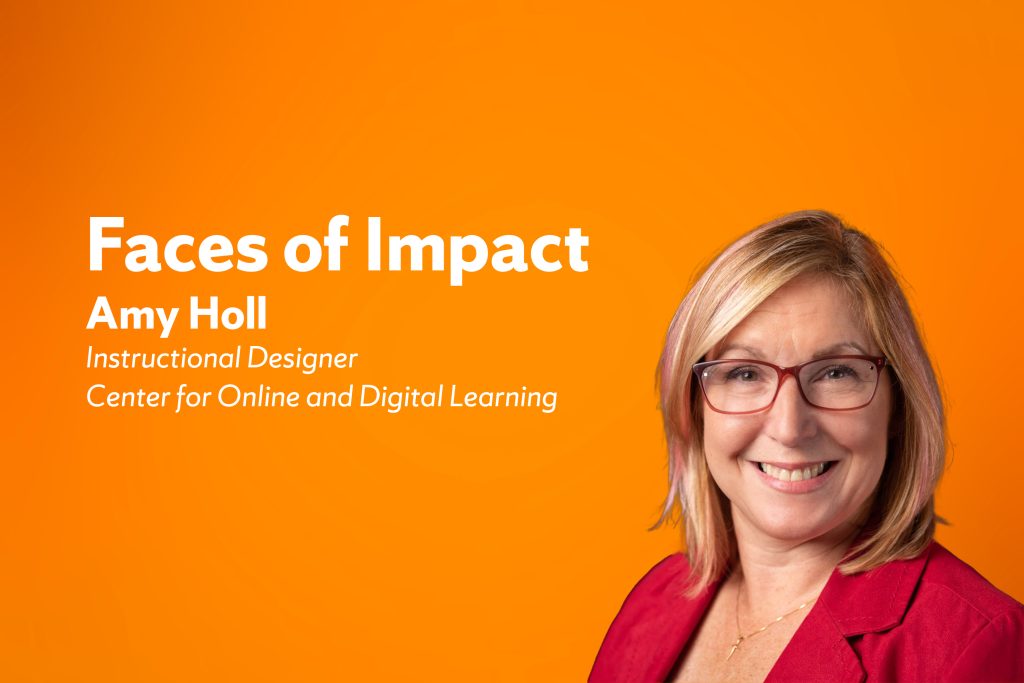
Faces of Impact: Amy Holl, Online Instructional Designer

In this edition of Faces of Impact, we spotlight Amy Holl, an instructional designer at Syracuse University’s Center for Online and Digital Learning.

With a deep commitment to inclusive, student-centered learning, Holl plays a pivotal role in shaping engaging and accessible online courses that meet the needs of a diverse, global student body. Her work exemplifies the College of Professional Studies’ mission to provide flexible, high-quality education that meets students where they are and helps them thrive.


What is your current role and what does it involve? 

I am an instructional designer. I work with faculty (SME – Subject Matter Experts) and a team of colleagues to design and develop courses for online delivery across academic programs at Syracuse University.  

In one sentence, how would you describe your department’s mission?

Our mission is to develop student-centered, engaging, rigorous, and inclusive learning opportunities for a diverse and global community of learners.

Why is instructional design an important part of the course development process?

Instructional design organizes course content and brings the course to life for the students.

Instructional designers use frameworks and ideas from learning theories like constructivism, andragogy, and experiential learning to design activities that help students connect concepts, ask questions, and build knowledge in ways that stay with them. When a course is thoughtfully designed, it’s easier for students to stay engaged, know what’s expected, and feel like the learning really matters.

Instructional design plays a vital role in creating meaningful learning environments that support how students learn most effectively.
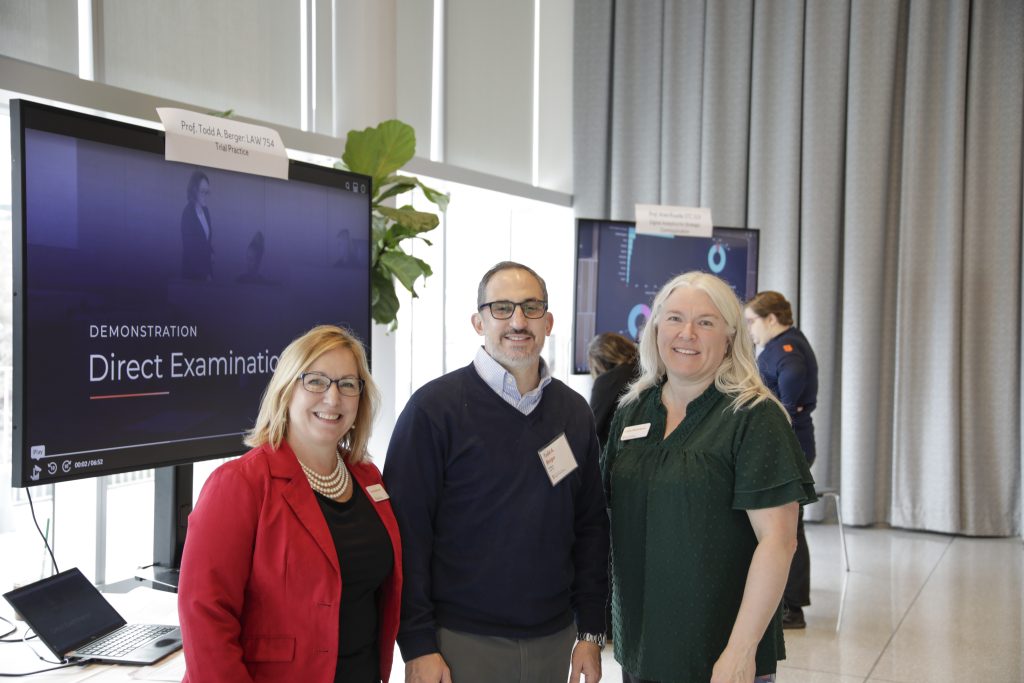
Left to right: Amy Holl, Todd Berger, and Cathy Mulholland at the Center for Online and Digital Learning Spotlight 2025.

In what ways does your team go above and beyond to serve online students?

Intentional, inclusive, and supportive course design is how our team goes above and beyond for online students. Students benefit from clear expectations, easy navigation, and engaging content that keeps them connected to their learning.

Every course is built with care, drawing on the deep expertise and creativity of our team to deliver high-quality learning opportunities with multimedia that supports student success. By focusing on best practices and listening and adapting, we make sure each student feels valued and equipped to succeed. We also prioritize authentic and inclusive pedagogy by designing for diverse learning preferences and encouraging adaptive strategies that help students meet complex learning goals.

How do you collaborate with faculty or subject matter experts during the instructional design process?

Planning Together: We meet with faculty throughout the process to talk through course goals, delivery format, timelines, aligning learning objectives with activities and student needs. This helps faculty think through how their content can be structured to support different learning preferences and students from varied backgrounds.

Rethinking Assignments: In collaboration with faculty, we redesign assignments to be more inclusive and flexible, allowing students to create materials that are relevant to their professional goals. We design course content that is relevant, engaging, and structured to support online and non-traditional learners in accessing and understanding material with ease. Our approach emphasizes authentic learning and supports the development of adaptive strategies that help students navigate complex tasks, build confidence, and apply their knowledge in real-world contexts.

Targeting Student Needs: We work closely with faculty to identify assignments and activities that meet the objectives for the course and also the needs of diverse online learners, including adult students, working professionals, caregivers, military-affiliated learners, and others balancing education with competing responsibilities. Our team offers flexible alternatives to traditional assessments and delivery formats that still meet learning outcomes while providing more choice and accessibility. For example, instead of a timed exam, we might suggest students create a podcast, video, or infographic that demonstrates their mastery of course content in a way that aligns with their professional goals and lived experiences.
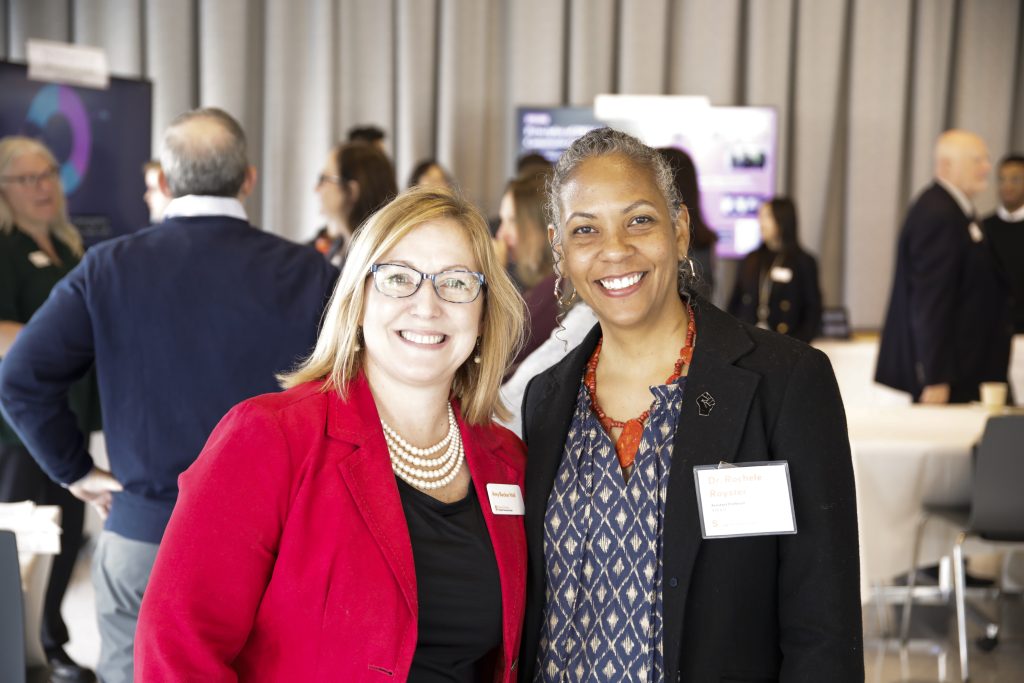
Left to right: Amy Holl and Rochele Royster at the Center for Online and Digital Learning Spotlight 2025.

How do you approach designing online courses to ensure they’re accessible to all learners?

When designing online courses, I prioritize inclusive pedagogy to ensure all learners feel welcomed and supported. This approach is grounded in key principles such as equity, accessibility, representation, flexibility, and empowerment, which guide every aspect of course development, from content creation to interaction and assessment design.

In our courses we ensure we use alt text for images, captioning and transcripts for media, clear and consistent navigation, high-contrast colors and readable fonts, keyboard-accessible interactions, chunked content with clear headings, flexible assignment formats, and accessible documents that work seamlessly with assistive technologies. Using inclusive pedagogy, we actively seek to create learning environments where all students feel valued, respected, and supported, regardless of their backgrounds, identities, or abilities.

As I work on courses, I want the materials to be thoughtful, artful, and impactful. Additionally, I want students to see themselves reflected in the content and feel that their personal perspectives and contributions are acknowledged and valued.

What makes the College of Professional Studies stand out as a leading environment for teaching and learning? 

We have the finest committed, caring and passionate team members that are student-centered. The College of Professional Studies stands out as a leading environment for teaching and learning because of its strong commitment to access, inclusion, and innovation.

Under the leadership of Dean Michael Frasciello, the College empowers diverse learners, including part-time and nontraditional students, through flexible, future-focused programs that combine academic excellence with real-world relevance. The College’s student-centered approach includes personalized support, interdisciplinary degrees, and high-quality online and on-campus options designed to meet learners where they are and help them succeed on their own terms.

My Personal Commitment: As a first-generation college graduate and passionate instructional designer, I am deeply committed to creating inclusive, student-centered online learning environments that support the educational needs and aspirations of diverse learners. I look forward to continuing this work in ways that have a meaningful impact on our students.
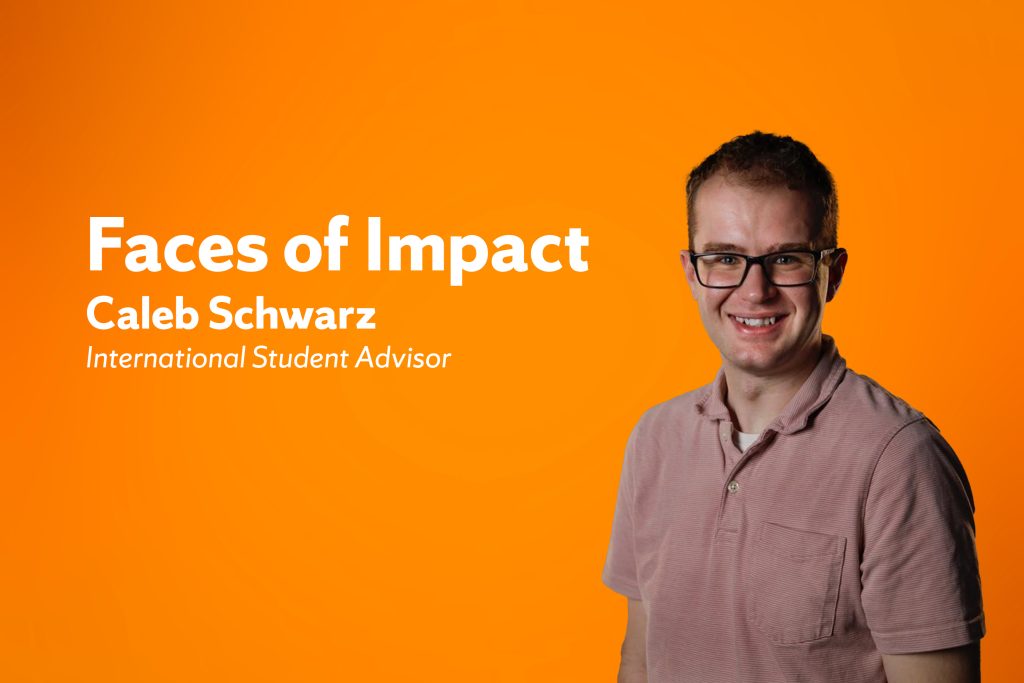
Faces of Impact: Caleb Schwarz, International Student Advisor 

At the College of Professional Studies, supporting international students goes far beyond academics, it’s about fostering belonging, building confidence, and creating a home away from home.

In this Q&A, we sit down with international student advisor, Caleb Schwarz, from the English Language Institute whose passion for global education and student connection shines through every airport pickup, advising session, and community outing.

Read on to discover how Schwarz is helping students turn Syracuse into a second home and shaping futures one connection at a time.

What’s your current role and what does it involve?

I am an international student advisor with the English Language Institute here at the College of Professional Studies. In that role, I provide support for students in various areas as they learn to adapt to life in the United States.

For example, I am currently undergoing training as a Designated School Official (DSO) for the Institute, which means I work with students on visa issuance and compliance. While I am responsible for several backend administrative tasks, my real passion comes from creating long-lasting, meaningful connections with students. Beyond providing cultural orientation and academic advising for them, I seek opportunities for students to get involved in the community and on campus in hopes that one day they will think of Syracuse as a “home away from home.”

How long have you been with the College, and what’s your journey been like?

I’ve been at the College of Professional Studies since late March of 2025.

My colleagues in the English Language Institute and I have been able to bond over our shared passion for global education and our commitment to making memorable experiences for the students we serve. Programming for new employees coordinated by college leadership has made it easy for me to meet my colleagues in other departments and collaborate on initiatives that create opportunities for students and the College at large. I look forward to what I hope will be a long and rewarding journey here at the College of Professional Studies.

In one sentence, how would you describe your department’s mission?

From my perspective, our mission is to provide a space where students feel comfortable to be themselves, explore their interests, and build their confidence in English to prepare them for a better, brighter future in the world.

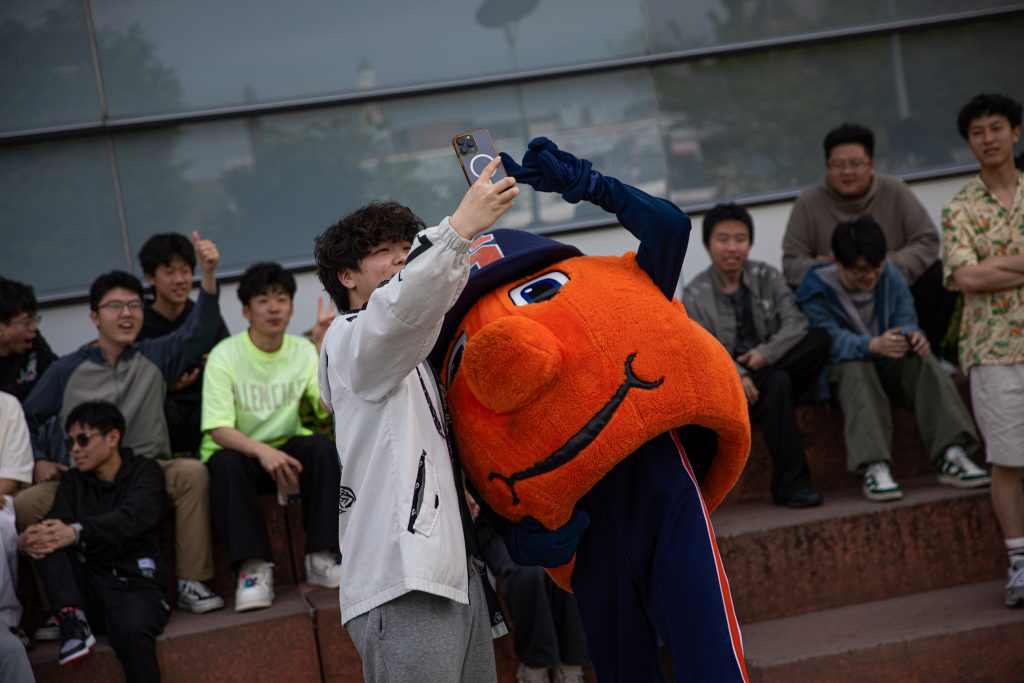
An iY-1 student takes a photo with Otto at the May 2024 orientation.

Can you share a student interaction that left a lasting impact on you?

One of my favorite parts of the job is picking international students up from the airport when they arrive for their English studies. The first student I picked up by myself was a very memorable experience for me. It was for a student in the International Year One program, a program where students take classes using a hybrid model for their first 30 credit hours from partner institutions and then transition onto main campus for their second academic year.

While taking the student to the dorm, we talked about his life up to that point and how excited he was to be in the United States to study. During his trip to the U.S., he bought jellybeans based on the Harry Potter series with wacky flavors to try. He offered me one and we laughed when I discovered the jellybean I had chosen was rotten-egg-flavored. I remember still how grateful this student was to see a familiar face pick him up at the airport.

Airport pickups are a way for me to welcome the students. Time permitting, I usually take them to department and grocery stores to buy apartment essentials and food after their long flights. It’s time to connect with them and show them that they are not alone during their time with us. They are now a part of the ELI family!

How does your team help students succeed in the real world?

Our student population is incredibly diverse, but there is one thing that all our students have in common—a desire to improve their English.

In today’s world, English is increasingly more important every day. For community members who already live here in Syracuse, they know this all too well. Many find it difficult to carry out normal daily tasks like going to the grocery store or going to the bank without a good foundation in English. We help our students be able to do things that you may think of as routine or ordinary, but for them, the difference means everything.

Just the other day, in fact, I heard a story about one of our students who has lived in the Syracuse community for some time now and was excited that he was able to order coffee in English by himself with confidence thanks to our classes. What our students learn in the classroom truly does go beyond the classroom.

In what ways does your team go above and beyond to serve your students?

I am incredibly lucky to work with a team of caring and highly motivated individuals. It has been a pleasure to get to know them in both a professional and personal capacity.

My colleagues are always looking for ways to do better by our students and make the time they spend with us special. They take the time to get to know each student personally and volunteer their time and money for programming and excursions. It has been extremely refreshing to be able to work somewhere where student interests are taken as a priority and innovation is valued.

My supervisor Kelsey Gillette has also been a great support for me as I transition. Her dedication and commitment to the ELI and our students is truly inspiring and I am extremely grateful to her for being there for me so that I can be there for the students.

iY-1 students in the classroom at the May 2024 orientation.

What advice would you offer to prospective or current students?

Don’t let your fears get in the way of your own success.

It can feel extremely isolating, and you can feel embarrassed when practicing your English—that’s normal. If you want to improve though, the only way is by practicing. This means putting your ego aside and not being afraid to make mistakes along the way. Don’t forget that what you’re doing is not easy and give yourself grace when things don’t go the way you planned. You can do difficult things.

From your experience, what makes the College of Professional Studies stand out as a leading environment for teaching and learning?

I think that the best part of working at the College of Professional Studies is the incredible team that is here. The people I work with are extremely passionate about what they do and want to create opportunities for non-traditional students to thrive and make a better life for themselves.

As a first-generation college graduate, I understand how important a good education is and the impact it can have on a person’s life. I am proud and inspired to find myself among a group of such dedicated and compassionate individuals and I hope to be doing this kind of work for many years to come.

Learn more about the English Language Institute at eli.syr.edu.

Explore Syracuse’s Online Policy Studies Program: Real Research, Real Impact

In an era defined by rapid change and complex challenges, the ability to shape effective public policy reflects a deep commitment to public service. Syracuse University’s online policy studies degree offers a transformative path for students who want to make a meaningful impact in government, nonprofits, and beyond.

Designed for flexibility and relevance, this fully online undergraduate program empowers learners to analyze, design, and implement policies that address real-world issues, from housing and healthcare to education and environmental justice.

Real Research, Real Impact: A Glimpse into the Classroom

What sets this program apart isn’t just the curriculum, it’s the caliber of faculty leading it. Austin Zwick, Ph.D., policy studies program director, recent research published in SAGE Journals asks “Does variation in the size of communities influence the ambition of their smart city plans?”

This kind of work isn’t just academic, it’s actionable. Students in the policy studies program engage with the same tools and frameworks used by professionals in the field, learning how to turn research into results.

Hear directly from Professor Zwick in this video where he shares insights into his research, the evolving landscape of policy studies, and what students can expect from the program. It offers a glimpse into the insightful academic engagement that defines the Syracuse University experience.


What You’ll Learn:

  • Examine how public policy is implemented.
  • Develop research and problem-solving skills to create government policies that address current social and economic problems facing the United States.
  • Explore an expertise in a policy area of your choice that provides a broad range of scholarly and professional perspectives.
  • Gain an understanding of collecting and synthesizing information in a variety of ways using quantitative research and analysis techniques.
  • Analyze important political science concepts and the basics of political argumentation and reasoning.
  • Develop competencies in the application of social science methods to public policy problems.

With six start dates per year and the ability to transfer up to 90 credits, this program is built for learners who want flexibility without compromising academic rigor.


Your Moment to Make a Difference Begins Now

If you’re passionate about solving problems and shaping the future, Syracuse University’s online policy studies degree is your path to making a difference. With expert faculty, cutting-edge research, and a curriculum rooted in impact, you’ll graduate ready to lead with insight and integrity.

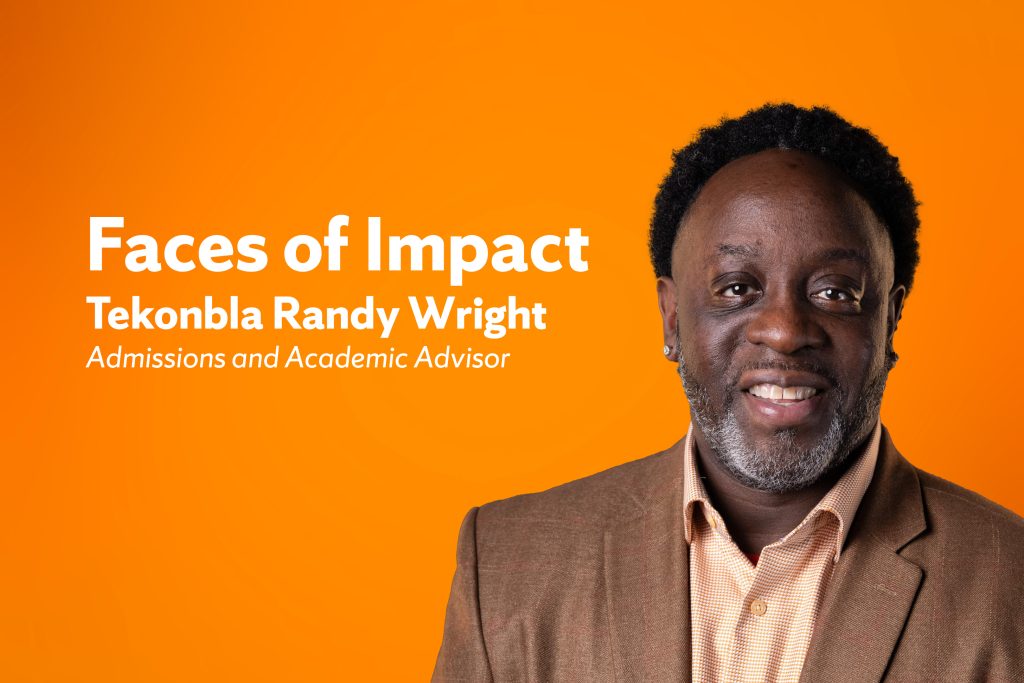
Faces of Impact: Tekonbla Randy Wright, Admissions and Academic Advisor

At the heart of the College of Professional Studies is a mission rooted in access, inclusion, and unwavering support. With five years of dedicated service, Tekonbla Randy Wright, admissions and academic advisor, has become a cornerstone for students navigating the complexities of higher education. This Q&A offers a glimpse into the journey, the impact, and the philosophy that drives Wright’s work: that success doesn’t always move fast, but it always moves forward.


What is your current role and what does it involve? 

I am currently the admissions and academic services advisor for part-time commuter students and an HEOP advisor.

In one sentence, how would you describe your department’s mission?

We create educational access for the community while building an inclusive and supportive community for commuter part-time students.

Can you share a student interaction that left a lasting impact on you?

I coached a young lady who graduated high school in 2016. She looked up to me as “father-like” figure. She was a very ambitious and high character young lady. After several years at Syracuse University, she had to drop out after becoming pregnant and having two children. She was struggling to get back in the fold. I reached out to her to check in when she said she wanted to get back to school. I set an appointment with her and got her back in school and even supported her as she was able to get a job on campus.

During our meeting, the student shared how my years of coaching had impacted her personally. She also spoke about my influence in the community, my presence as a father balancing work and life, and the positive example I set for young adults.

After working at Syracuse for almost a year, she was encouraged to apply for a position in the commuter part-time studies department as the learning coordinator and assistant to the director of HEOP. She is now working with me and I’m advising her as she is finishing her degree. She has been a bright and positive energetic person to our office.  

How does your team help students succeed in the real world?

We meet students where they’re at. We have a population of non-traditional students that range from 18-75. We are sensitive to their needs and what barriers are in their lives. Supporting them with classes, tutoring, transportation, and ongoing guidance while navigating home and school is a priority to us.

In what ways does your team go above and beyond to serve your students?

One day I was at the grocery store and ran into a student working at a bank that was housed in the store. Our staff had just met about her and not being able to connect with her. Her phone had been off, and she started a new job that went from 9-4 and didn’t think she’d be able to take classes. I made an appointment for her on a Saturday to accommodate her work schedule. After having to jump through a few hoops with technical issues, I met her at her job and during her lunch, we sat down and got her registered for her courses. We have since been able to loan her a laptop to support her for the semester.

What advice would you offer to prospective or current students?

“The well is never dry.” Everyone moves at their own pace. Don’t let the struggles of life stop your movement towards success. Students may have to take time off and come back for whatever personal reasons, but we will always be available for support and guidance. Our motto for HEOP is, “once HEOP, always HEOP.” You’ll always have a home and access for support if you want it. Move at your own pace. Sometimes slow motion is the best motion to be successful or the get the job done.

What makes the College of Professional Studies stand out as a leading environment for teaching and learning? 

We have a strong sense of respect, admiration, and devotion to the students we work with. Having a full-time life away from school, managing many different obstacles and challenges while still striving for educational success and opportunities is admirable. Therefore, our entire staff makes sure we are supporting our students “where they’re at.” Meeting them at the beginning of their journey and making sure someone is with them along the way. The outpouring of support and help from within makes this a well-oiled machine. Also, there is no “I” in this team effort. We see it. We work it. We make it happen!


Your future starts now.

Take the next step in your learning journey and connect with an academic advisor today!

Microcredentials Are Reshaping Education: The New Standard for Lifelong Learning

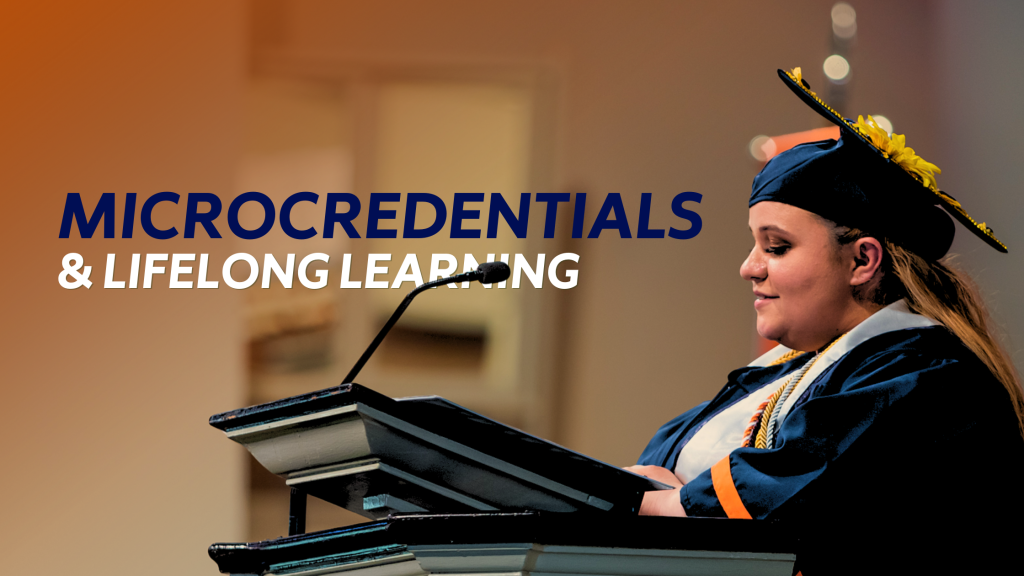
a student in a cap and gown stands at a podium accompanied by the text "microcredentials and lifelong learning"

In today’s rapidly changing job market, continuous learning with microcredentials isn’t just an advantage, it’s a necessity. As industries like technology, finance, and digital marketing evolve, professionals must consistently upgrade their skills to stay relevant. Microcredentials for professional growth provide a flexible, targeted, and efficient way to enhance expertise, making lifelong learning career development more accessible than ever. But are microcredentials truly the key to lifelong learning? Let’s explore the role of microcredentials in career development, skills development, and future-proofing your career.

What Are Microcredentials?

Microcredentials and lifelong learning go hand in hand. These compact, skill-focused certifications are designed for quick and practical learning. Unlike traditional degrees that take years to complete, microcredentials in technology, finance, and marketing can be earned in just a few weeks or months. Many microcredentials are offered online and can be shared on LinkedIn, resumes, and job applications to showcase specialized qualifications to employers.


The Role of Microcredentials in Lifelong Learning

Microcredentials for continuous career advancement are reshaping how professionals stay competitive by offering:

1. Staying Current with Industry Trends

For example, industries such as technology, finance, and digital marketing change at a breakneck pace. Microcredentials for professional growth allow professionals to gain timely, relevant skills and stay ahead of market trends, ensuring career longevity and job security.

2. Enhancing Career Development

Additionally, ongoing education is crucial for lifelong learning career development. Microcredentials and lifelong learning offer a structured yet flexible way to build expertise, making them ideal for working professionals who want to upskill without committing to a full degree program. As a result, these certifications help individuals stay competitive in the job market and open doors to new opportunities.

3. Strengthening Skill Development

Moreover, skills development through microcredentials caters to both technical and soft skills. Whether it’s leadership development, UX/UI design in tech, or social media strategy in marketing, these certifications enable professionals to sharpen their abilities and expand their career prospects.


Businessman using artificial intelligence technology

How Microcredentials Support Continuous Career Advancement

1. Future-Proofing Your Career

Consequently, with automation and AI reshaping industries, traditional roles are evolving. Future-proof your career with microcredentials by gaining specialized knowledge in emerging fields, helping professionals adapt to changing job requirements and maintain long-term employability.

2. Gaining a Competitive Edge

Additionally, employers recognize the value of microcredentials for continuous career advancement as proof of expertise. Individuals who pursue these certifications demonstrate a commitment to self-improvement, making them more attractive candidates for promotions and higher-paying positions.

3. Enabling Flexible Learning

Digital learning and career progression go hand in hand with microcredentials after all. Online courses allow professionals to upskill while balancing work, family, and personal responsibilities, ensuring continuous career progression without disrupting daily routines.


The Benefits of Lifelong Learning Through Microcredentials

All in all, investing in microcredentials and lifelong learning offers multiple advantages, including:

  • Cost-effectiveness: Compared to traditional degrees, microcredentials are more affordable and time-efficient.
  • Specialized knowledge: Focused learning ensures professionals acquire the exact skills they need.
  • Flexibility: Online options enable learners to balance education with work and personal life.
  • Employer recognition: Many companies now accept lifelong learning certifications as valid proof of expertise, enhancing career opportunities.

So are you ready to take your career to the next level? Explore microcredential programs with the Syracuse University’s College of Professional Studies today and unlock new opportunities for success!