
Academics

Credit or Noncredit – What’s Best for You?

The landscape of higher education is evolving, and for good reason —not all learners are seeking a degree from a college or university. Many learners want or need to gain new skills or knowledge in a format that fits into their busy lives.

Microcredentials, certificates and condensed courses can offer learners a noncredit pathway to achieving their educational goals outside of a degree program. With so many offerings, you may be wondering what the best option is for you—credit or noncredit?  

The first question you should ask yourself is; What is your end goal?

Do you want a job that typically requires a certain degree or degree type (Bachelor’s, Master’s, etc.) as a job requirement? Have you been interested in getting a degree but you don’t have the time to attend college full-time?

In these cases, you should search for courses or programs that provide college credit, which can be applied to a degree program immediately or when you are ready to matriculate into a degree program.

If you need a quick upgrade in your competency around a certain subject or skillset and you don’t plan on earning a degree, then a noncredit option may be more suitable for you.

Here is a breakdown of the differences and advantages of credit and noncredit options:

Credit Courses and Programs

Credit courses and programs are designed for learners who are interested in earning college credits towards a degree or certificate. 

Important points about credit courses/programs:

  • Credits add up and can be applied toward a degree or credit certificate.
  • Depending on your enrollment status, you may be eligible to receive financial aid to help with the cost of your courses.
  • College credit is granted only by authorized higher education institutions, and a unit of credit is often transferrable between institutions.
  • College credit is granted only when a student successfully achieves the specific requirements of the course.

A credit course or program may be ideal for you if:

  • Your employer offers education benefits that have a grade or credit requirement.
  • You want to earn an associate degree but think you may pursue a Bachelor’s degree at some point.
  • Your dream job requires a Bachelor’s or Master’s degree as a job requirement.
  • You are enrolled at a four-year college and are home for the summer, and you want to enroll in a course that will transfer to your home school and apply towards your four-year degree.

Noncredit Courses and Programs

Noncredit courses are intended for learners who want to focus on acquiring specific knowledge, learn a new skill, upgrade existing skills, or develop personal interests without the consideration of accumulating college credit. By providing condensed and focused learning experiences, noncredit courses and programs allow students to build a unique portfolio of knowledge, skills and/or competencies in a short amount of time, whether for professional advancement or personal interest. Upon completion, students receive a certificate of completion or digital badge

Important points about noncredit courses/programs:

  • Noncredit courses typically cannot be applied directly towards a degree or credit-bearing certificate programs. However, some institutions are pursuing ways to evaluate the effort and assessment of learning in noncredit courses to determine if they can “stack” into a credit program as evidence of prior learning or experience. This is only at the discretion of each institution and is not as widely interchangeable as college credit.
  • Federal financial aid is restricted to only certain types of noncredit courses, or certain types of institutions that provide them. You will need to check specifically for each course and provider as to whether aid is available.
  • Noncredit courses can often lead to the achievement of a professional “certification”, which is evidence that you have achieved some specific competency at a certain level. Certifications can be preferred, or even required, by an employer.
  • If noncredit courses are to be used for professional improvement or career enhancement, then they should include some measurement of the specific knowledge, skills or competencies targeted by the course that would appeal to employers.

A noncredit course or program may be ideal for you if:

  • You want to improve your skills and enhance your resumé.
  • You want to learn more about a hobby that interests you.
  • You’re working toward a professional certification, so you can land a job in your desired field.


View all credit and noncredit programs available through the College of Professional Studies.
 

Record-Breaking Attendance for 2022 Summer College at Syracuse University

By Amy Kruse

This summer, Syracuse University’s Summer College welcomed its largest cohort of high school students in its over 60-year history. More than 1,000 students from around the world enrolled in an on-campus or online pre-college course through Syracuse University. This was the first time in two years that pre-college students were on campus for the program.

“I am overjoyed that so many high school students chose to attend Summer College at Syracuse University,” said Chris Cofer, executive director at the Office of Pre-College Programs. “We made a concerted effort to maintain a robust and diversified portfolio of over 100 course offerings, and I think students responded to that.”

College of Professional Studies Announces New Faculty Member, Daniel Hebert, J.D., LL.M.

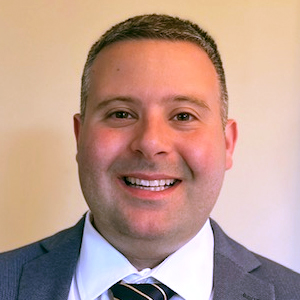
Dan Hebert portraitDaniel Hebert joins Syracuse University’s College of Professional Studies as an assistant teaching professor.

Hebert will teach and develop courses in business management, creative leadership and other areas of professional studies. 

“I am truly excited to join the College of Professional Studies. It is a privilege to be part of a college that is always looking forward for ways to better serve its diverse student body while engaging in high-quality scholarship. I look forward to dedicating my teaching, research, and service both to the College of Professional Studies and Syracuse University as a whole,” says Hebert.

Prior to joining Syracuse University, Hebert was a lecturer at SUNY Polytechnic Institute from 2020 to 2022 and taught law, taxation and business courses.

Hebert received an LL.M. from Washington University in St. Louis in 2020, a J.D. from the University at Buffalo in 2011, and a B.S. from SUNY Polytechnic Institute in 2008. In 2012, Hebert was admitted to the New York State Bar.

Hebert’s research focuses on corporate law, taxation, not-for-profit organizations, business organizations and education.

Most recently, Hebert co-authored the CPA Journal article “Twenty Questions on the Challenges of Maintaining the Quality of Academic Education During the COVID-19 Pandemic.”

“Professor Hebert has fresh, innovative ideas for future programming and a genuine enthusiasm for teaching and mentoring.  We are thrilled to welcome him to the College, to Syracuse University, and to our growing faculty ranks,” said Ryan Williams, associate dean of the College of Professional Studies Academic Affairs office.


About the College of Professional Studies

The College of Professional Studies is a global, inclusive and future-facing college, providing access to diverse students and learners seeking a Syracuse University degree, credential, certificate or education experience.

Virtual Vocabulary: Online Learning Terms that will Set You Up for Success

As the number of online degree programs increases, so does the virtual vocabulary. Learning Management Systems, synchronous sessions, breakout rooms, digital badges… All of these terms can seem scary and intimidating, but no worries. We’ve broken them all down for you so you’re ready to earn your online degree or certificate!

  • Modality
    • Modality refers to how a course is taken: online, in person, or hybrid. All of the Bachelor of Professional Studies (BPS) and Master of Professional Studies (MPS) courses offered through the College of Professional Studies are 100% online and have synchronous and asynchronous components.
  • Synchronous (aka “synch session”)
    • Most of the courses at the College of Professional Studies have both asynchronous and synchronous components, which means you will have coursework to complete on your own time and you will meet with your instructor and classmates in a virtual classroom for 90 minutes one evening (EST) per week for the duration of the course (typically 8 weeks). Synch sessions are an invaluable benefit of online courses. You will gain a better understanding of course topics because your questions can be answered on the spot and you can listen and be a part of discussions. You also become part of the University community, which can be an enriching and rewarding experience.
  • Asynchronous (aka “asynch”)
    • Most of the time you spend in your courses at the College of Professional Studies will be asynchronous. Asynchronous coursework can be completed on your own time between synch sessions. This can include watching videos, writing papers, working on group projects, or completing homework assignments. The amount of time you will spend completing asynch coursework will vary from course to course.
  • LMS (Learning Management System)
    • The Learning Management System (LMS) is the software that schools use to facilitate their online programs. It’s kind of like a virtual school. It has classrooms (links that take you to your virtual classrooms), your syllabus and other course materials, a forum to communicate with your instructor and classmates, a place to submit your homework, and lots more.
    • At Syracuse University, we use Blackboard as our LMS. Blackboard is easy to use and can be accessed from anywhere you can access the internet so you can complete your asynch coursework any time.
    • Once you’re accepted into the College of Professional Studies, the Office of Online Student Success team will meet with you to walk you through how to use Blackboard so you can log into your first class with confidence.
  • Virtual Classroom/Live Session
    • A virtual classroom works much like an in-person classroom, except your desk is wherever you can access the internet. When you log into your synch session, you need a camera and microphone so you can watch, listen and engage with your instructor and classmates. Depending on the course you’re taking, there may be small group work, opportunities to share thoughts and ask questions, videos to watch and respond to, and other engaging activities that will help you understand the course content.
  • Breakout Room
    • A breakout room is an engaging activity that instructors often use in their virtual classrooms. It’s a way for students to have small group discussions, work on group projects, or complete in-class work. To do this, the instructor will divide the class into small groups within the virtual classroom. A button will appear for you that will take you to your breakout room. You will then be moved into a different virtual classroom with only your breakout room group members. The instructor may enter your breakout room at any time to answer questions or facilitate discussions. When the breakout room is over, you will automatically be moved back to the original virtual classroom.
  • Office Hours
    • Professors and course instructors make themselves available to speak to students one-on-one or in small groups on the phone or in a video chat at specific times throughout the week. They offer support, answer questions, and provide clarity on assignments and course topics. Taking advantage of office hours is highly encouraged and a good way to get to know your professors—and for them to get to know you!  
  • The Office of Online Student Success (OSS)
    • The Office of Online Student Success is dedicated to supporting students every step of the way as they earn their degree or certificate. Not only will they teach you how to use Blackboard so you can confidently log into your first synch session, but they will also help you select courses that will further your degree progression, connect you with resources at the university, and monitor your academic progress. They are a reliable source of guidance and support.
  • Certification
    • Certifications show professional competency in a highly specialized area. They are awarded by an organization that is authorized to test or evaluate an individual to confirm they have the necessary skills to hold the certification.
  • Certificate
    • A certificate is earned after successfully completing a set of credit-bearing or noncredit courses that are focused on a particular professional specialty.
  • Digital Badges
    • Digital badges demonstrate that an achievement has been earned for instructional, competitive or experiential purposes. They are digital icons that, when clicked, provide information about the learning and assessments that were completed and verify that the learning outcomes have been successfully met. Each digital badge is unique to the learning opportunity, the individual who completed it, and the badge-granting entity.  
  • Learning Assessment
    • A learning assessment is a measurement or evaluation used by an instructor to verify that the student has learned the content of the lesson or course. Learning assessments can be in the form of quizzes or tests, assignments, presentations, projects or experiential learning on the job.
  • Microcredential
    • Microcredentials play a unique role in helping students to upskill or reskill to be more competitive in the job market. Typically consisting of one or a handful of courses and offered in multiple modalities, they allow students to build a portfolio of demonstrated learning in a short amount of time for professional advancement or personal interest. Microcredentials are often focused on a particular skill or topic, so students can enhance their resume with personal or professional skills outside of a degree program. They can sometimes be combined (or “stacked”) as part of a more complex microcredential, course, program or degree.
  • Microcredential Modality: Self-Guided Online Course
    • Self-guided online courses are taken at your own pace and in your own time. Often, you will have videos to watch, quizzes throughout the course, and then a final test that you need to pass in order to earn credit for the course. You are not part of a class, so you do not have classmates or an instructor.
  • Microcredential Modality: Instructor-Guided Online Course
    • An instructor-guided online course is self-guided, but it’s different because there is an instructor who is available to answer questions and submit feedback on assignments via email or online forum. Typically, you will receive a syllabus and assignments to complete and submit.
  • Microcredential Modality: In Person Course  
    • An in-person course or workshop is taken in a classroom or other location. The course is lead by a professor, instructor or leader, and you will take the course together with other students.
  • Post-traditional
    • Post-traditional learners are students who engage in academic experiences through Syracuse University in a manner outside of a post-secondary residential experience. At Syracuse, we use the term post-traditional broadly to include anyone who has completed a Syracuse University learning experience part-time, online, through short courses, microcredentials, certificate programs or workshops. Post-traditional students are an important part of our community and bring a wealth of perspectives and diversity to our student body and orange family.

Did we miss a term? Let us know! Do you know someone who would benefit from learning these terms? Share this blog post!

Syracuse University Offers Online Courses With Community College of the Air Force Under The General Education Mobile Program

Under the General Education Mobile (GEM) Program, Syracuse University’s College of Professional Studies continues its commitment to offer affordable education to military-connected students by providing online courses in partnership with the Community College of the Air Force (CCAF).

For over 100 years, Syracuse University has been committed to offering military-connected students affordability, academic success, and a seamless transition to the student experience. Syracuse University continues to honor this commitment by being an approved CCAF GEM university.

The GEM Program, a partnership between CCAF and civilian academic institutions, offers general education courses which fulfill requirements for the CCAF Associate in Applied Science degree.

“We are thrilled to be one of the newest institutions approved under the CCAF GEM program. Accessibility to higher education through online modalities is of critical importance to military-connected students,” says Liz Green, executive director of online student success. “Our online courses approved through GEM will help support Airmen in continuing towards their educational goals.”

Syracuse University GEM Program courses are offered at a reduced rate of $250 per credit. With rolling admission offering 6 starts a year, approved courses utilize the College of Professional Studies’ 8-week online course format, which offers the ability to fit more classes into a traditional semester.

Part-time, online students enrolling in courses will receive dedicated online academic services and support provided by the College of Professional Studies. With a centralized support team, students will receive assistance for topics regarding advising, bursar/registration and financial aid.

“Making a Syracuse University education more accessible to members of the military starts with meeting them where they are in their professional lives,” says Michael Frasciello, dean of the College of Professional Studies. “The CCAF GEM program puts our online general education courses in front of Air Force members stationed anywhere in the world, giving them unencumbered access to exceptional foundational courses they’ll use toward their CCAF degrees and beyond.”

To learn more about courses and enrollment, visit professionalstudies.syracuse.edu/info-for/veterans-military/gem.


About the College of Professional Studies

The College of Professional Studies is a global, inclusive and future-facing college, providing access to diverse students and learners seeking a Syracuse University degree, credential, certificate or education experience.