
Blog

Build In‑Demand AI and Automation Skills with a Fully Online Degree

Artificial intelligence is reshaping the way businesses operate, from streamlining processes to enabling smarter decision-making. As organizations increasingly rely on both automated and generative AI, employers are looking for graduates who can leverage AI to drive efficiency and innovation. Syracuse University’s Bachelor of Professional Studies (BPS) in AI in Business Process Automation equips students with the skills and knowledge to excel in this rapidly evolving landscape.

Businessman using artificial intelligence technology

What Sets Our Program Apart

Our Bachelor of Professional Studies in AI in Business Process Automation is a 120-credit, fully online degree designed to prepare students for real-world business applications of AI. Unlike traditional computer science programs, this degree focuses on applied AI in professional contexts, giving students the ability to integrate tools directly into business processes.

Students gain hands-on experience in:

  • AI Skills: Learn to evaluate AI technologies, implement intelligent automation solutions, and interpret complex data to make strategic decisions
  • Stackable Credentials: Build on Syracuse’s existing Minor and Certificates in AI Business Applications or Applied Digital Automation, creating flexibility to enhance your degree or specialize further
  • Future-Ready Learning: Explore emerging AI trends and understand how to anticipate risks, opportunities, and challenges in AI-driven business operations

Flexible Online Learning Designed for Modern Professionals

The BPS in AI in Business Process Automation is 100% online, offering flexibility for working professionals, transfer students, and adult learners. Program features include:

  • Multiple start dates per year to fit your schedule
  • 8-week courses for focused, accelerated learning
  • Asynchronous and synchronous learning to balance career and education

This flexible structure allows students to advance AI skills without putting their careers on hold.


Why Choose Syracuse University’s College of Professional Studies

Graduates of the BPS in AI in Business Process Automation are prepared for high-demand, AI-driven careers across industries such as healthcare, finance, retail, and technology. 

The College of Professional Studies (CPS) combines applied learning, AI expertise, and business strategy to prepare graduates for leadership roles in an AI-powered economy. Students gain a deep understanding of both automated and generative AI, ensuring they can adapt to new technologies, make informed decisions, and lead innovation in any professional environment.

By enrolling in the BPS in AI in Business Process Automation, students not only acquire technical proficiency, but also the strategic and critical thinking skills that employers value most.

Take the Next Step

Are you ready to lead in an AI-driven workplace? Syracuse University’s BPS in AI in Business Process Automation provides the knowledge, skills, and credentials to set you apart.
Balancing Work, Family, and College: How HEOP Makes Part-Time Study Possible

For many adults, the dream of earning a college degree doesn’t disappear, it just gets pushed behind work schedules, family responsibilities, and financial pressures. The challenge isn’t motivation; it’s bandwidth. That’s why Syracuse University’s Higher Education Opportunity Program (HEOP) for part‑time students has become vital for New Yorkers who want to advance their education without putting their lives on hold.

This program is unique as it’s the only part-time HEOP option in New York State, and it’s designed specifically for students who need flexibility, support, and a pathway that fits real life.

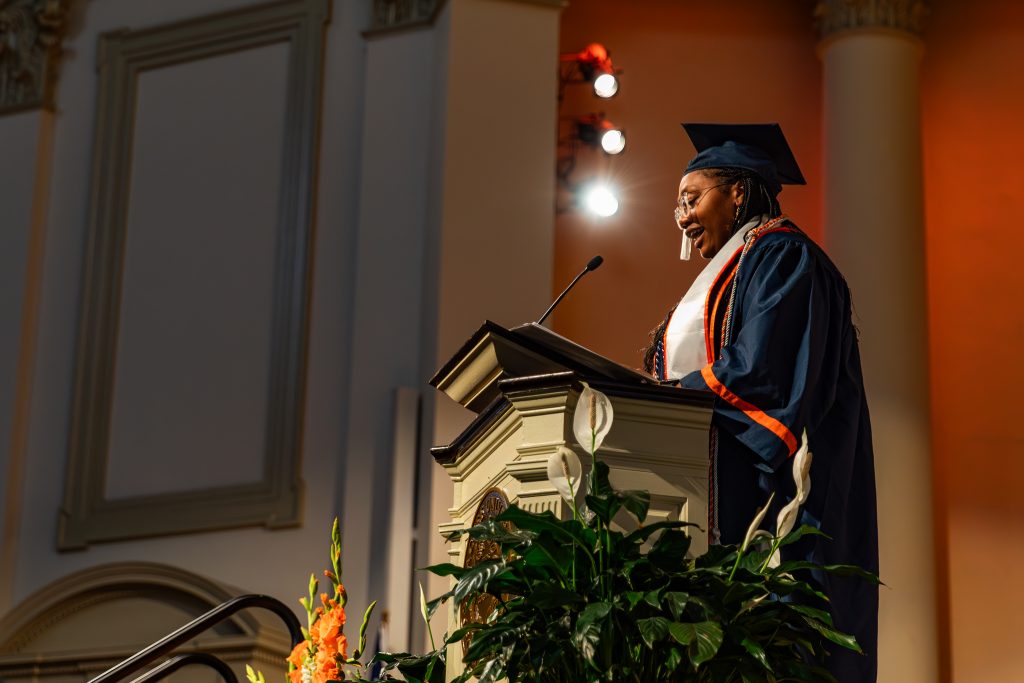
A student speaks at a podium at the 2024 convocation.

Why Adult Learners Need a Different Kind of Support

Traditional college pathways assume students can attend full‑time, live on campus, and dedicate most of their hours to school. But for adult learners, that model rarely works. Many HEOP students are:

  • Working full‑time or part‑time
  • Raising children
  • Caring for aging parents
  • Changing careers or starting fresh

Balancing these responsibilities while pursuing a degree requires more than determination, it requires a system built to support them.


How HEOP Removes Barriers for Part‑Time Students

Syracuse University’s part-time HEOP program is structured to eliminate the obstacles that typically prevent adults from returning to school.

1. Financial Support That Reduces Stress

HEOP covers essential educational costs, which may include:

  • Tuition
  • Fees
  • Books and course materials
  • Parking
  • Childcare assistance (when applicable)

For many adult learners, these costs are the biggest barrier. HEOP helps remove that burden so students can focus on learning, not worrying about how to pay for it.

2. Academic Support Designed for Busy Adults

Returning to school after years, or even decades, can feel intimidating. HEOP provides:

  • One-on-one academic advising
  • Tutoring in writing, math, and subject specific areas
  • Workshops to build study skills and confidence
  • Personalized guidance to help students stay on track

This support is especially valuable for students who may have struggled academically in the past or who are balancing coursework with demanding schedules.

3. Flexible Part-Time Pathways

The College of Professional Studies at Syracuse University specializes in serving non-traditional students. That means:

  • Evening, daytime, and online course options
  • Programs built for working adults
  • Advisors who understand the realities of adult life

HEOP students can progress at a pace that fits their responsibilities while still moving steadily toward a degree.


Real‑Life Impact: What Balancing Work, Family, and College Looks Like

Many HEOP students share similar stories: they wanted to go to college earlier in life, but circumstances got in the way. Now, with families to support and bills to pay, they need a program that understands their world.

HEOP makes it possible for students to:

  • Work during the day and take classes at night
  • Study while raising children
  • Build new career opportunities without sacrificing income
  • Gain confidence and academic skills they never thought they’d have

The program doesn’t just open doors, it helps students walk through them with support at every step.


Who is eligible for HEOP?

Low-income New York State residents who have a high school diploma (4-year average between 70 and 84.5) or GED but have never been to college may be eligible for HEOP. Even if you didn’t do well in school in the past, you may discover that you have what it takes to go to college.

College students enrolled in an HEOP or EOP program at another college may be eligible to transfer into the Syracuse University part-time HEOP program.

Learn more about HEOP Eligibility and Economic Guidelines here.


Why HEOP Matters Now More Than Ever

In today’s economy, education is one of the most powerful tools for career mobility. But for adults with families and full-time jobs, traditional college pathways simply aren’t realistic.

HEOP bridges that gap by offering:

  • Access
  • Flexibility
  • Financial relief
  • Academic support

HEOP isn’t just a program, it’s a pathway to a better future.

Balancing work, family, and college is no small feat. But with the right support system, it’s absolutely possible. Syracuse University’s part-time HEOP program proves that higher education doesn’t have to be out of reach for adults with big responsibilities and even bigger goals.

Connect with Syracuse University’s Part-Time HEOP Office Today!

How Today’s Learners Can Prepare for an AI‑Driven Workforce

As industries transform at high speed, organizations are prioritizing graduates who bring a blend of technical expertise, strategic thinking, and adaptability. Artificial intelligence, digital automation, and data‑driven decision‑making are reshaping fields like healthcare, retail, finance, and technology. As a result, AI‑driven workforce skills are becoming essential for long‑term career success.

Businessman using artificial intelligence technology

Syracuse University’s College of Professional Studies (CPS) is meeting this demand head‑on. Through flexible online degrees, certificates, and minors, learn how CPS equips students with the practical knowledge employers increasingly expect.


AI in Business Process Automation: Preparing Future Professionals for an AI‑Driven Workforce

One of the most forward‑thinking programs at Syracuse University is the Bachelor of Professional Studies (B.P.S.) in AI in Business Process Automation, a 120‑credit online degree designed specifically for the realities of an AI‑powered economy.

Students develop AI‑driven workforce skills such as:

  • Evaluating AI tools and digital automation systems to improve operational efficiency
  • Translating complex data into clear, actionable business insights
  • Designing intelligent automation solutions that streamline workflows
  • Anticipating emerging AI trends, risks, and opportunities across industries

These capabilities align directly with the competencies employers will prioritize over the next decade: critical thinking, ethical decision‑making, and the ability to leverage AI for strategic business outcomes. As AI becomes embedded in every sector, graduates with these AI‑driven workforce skills will stand out.


Flexible Programs Across High‑Demand Fields

The College of Professional Studies also provides a broad selection of online programs that complement AI-based skills, including options in leadership, technology, policy, and interdisciplinary studies.

Leadership and Management

These programs strengthen decision‑making, communication, and organizational leadership skills, which highly complement AI‑enabled tools and workflows.

Technology and Security

Students gain technical fluency in cybersecurity, automation, and AI applications, which are core components of modern AI‑driven workforce skills.

Interdisciplinary and Policy‑Focused Programs

  • Healthcare Administration – B.P.S.
  • Policy Studies – B.P.S.
  • Interdisciplinary Studies – B.P.S.

These programs prepare students to navigate complex systems, analyze data, and apply policy insights, which are competencies increasingly enhanced by AI‑powered tools.

Across all programs, CPS emphasizes practical, applied learning that prepares graduates to lead in roles requiring human judgment, creativity, and AI‑enabled decision‑making.


Flexible, Career‑Focused Learning for Working Professionals

Syracuse University’s College of Professional Studies programs are intentionally designed for adult learners, career changers, and working professionals who need flexibility without sacrificing academic rigor. Students benefit from:

  • 100% online coursework
  • Multiple start dates throughout the year
  • Stackable and transferable credits
  • Hands‑on, applied learning aligned with real employer needs

This structure allows students to build AI‑driven workforce skills at their own pace while immediately applying new knowledge in their current roles.


Shaping the Future With AI‑Driven Workforce Skills

By integrating AI literacy, digital automation, leadership development, and interdisciplinary problem‑solving, Syracuse University’s College of Professional Studies ensures its graduates are prepared for the careers of the future. As industries continue to evolve, professionals with strong AI‑driven workforce skills will be best positioned to meet the challenges and opportunities of an AI‑powered economy.

Learn more about AI-Driven Workforce degrees, minors, and credit certificates today.

Automated AI vs. Generative AI: What Students Need to Know

Artificial intelligence is no longer a distant concept reserved for sci‑fi movies. It’s here now, reshaping how industries operate, how decisions are made, and how professionals work across nearly every field. From business to healthcare, cybersecurity to project management, AI has become a foundational skill for the modern workforce.

Now, students are encountering two major categories of AI that are rapidly transforming the professional landscape: automated AI and generative AI. While both are powerful, they serve very different purposes. Understanding these differences is essential for students who want to build competitive, career‑ready skills in an AI‑driven world.

In this guide, we break down what each type of AI does, where you’ll see it in action, and why students should be knowledgeable in both.

Businessman using artificial intelligence technology

What Is Automated AI?

Automated AI is the backbone of efficiency in today’s digital systems. It focuses on speed, accuracy, and optimization, performing predefined tasks using structured rules or predictive models. Once deployed, automated AI often runs with minimal human intervention.

Where You’ll See Automated AI in Action

Automated AI powers many of the systems we interact with every day, including:

  • Supply chain and logistics optimization
  • Fraud detection and risk assessment systems
  • Recommendation engines
  • Robotic Process Automation  

Automated AI excels at handling repetitive, rules‑based, or data‑heavy tasks at scale. Rather than replacing entire jobs, it typically automates specific functions, freeing professionals to focus on strategy, creativity, and human‑centered decision‑making.

Want to Build Skills in Automated AI?

Syracuse University offers a fully online program designed for students who want to master automation tools and business‑ready AI systems:


What Is Generative AI?

Generative AI represents the next evolution of artificial intelligence. Instead of simply following rules or optimizing processes, generative AI can create entirely new content.

Using large language models (LLMs), neural networks, and deep learning, generative AI can produce:

  • Text
  • Images
  • Audio
  • Video
  • Computer code
  • Data simulations
  • Design concepts

Common Applications of Generative AI

You’ve likely interacted with generative AI tools already. They appear in:

  • AI chatbots and virtual assistants
  • Content creation and marketing tools
  • Image and video generation platforms
  • Software development support

Unlike automated AI, generative AI is exploratory. It identifies patterns in massive datasets and uses them to produce original outputs, making it especially valuable in fields that require innovation, communication, and strategic thinking.


Automated AI vs. Generative AI: Why the Difference Matters

For students, understanding both types of AI isn’t just helpful, it’s essential.

Employers today aren’t just looking for technical skills, they want graduates who understand how AI works, when to use it, and how to use it responsibly.

Automated AI requires:
  • Systems thinking
  • Process optimization
  • Data analysis
  • Workflow design
Generative AI requires:
  • Critical evaluation
  • Ethical awareness
  • Creativity and communication
  • Human oversight and judgment

By mastering both automated and generative AI, students position themselves as adaptable, forward‑thinking professionals ready to lead in an evolving digital economy.


How Syracuse University Prepares Students for an AI‑Driven Future

Syracuse University’s College of Professional Studies offers online programs designed specifically to help students build real‑world AI skills that employers value.

AI in Business Process Automation

Learn how to design, implement, and manage automated AI systems that streamline business operations.

Applied Digital Automation

Gain hands‑on experience with automation tools, digital workflows, and AI‑powered business solutions.

Both programs are flexible, fully online, and built for students who want to develop in‑demand skills that translate directly into the workplace.

6 Easy Ways Students Can Stay Motivated During Winter Break

Winter break can feel like a much needed pause, but for many non-traditional, online, and part‑time college students, it can also disrupt routines, slow momentum, and make it harder to restart when classes resume. Between work schedules, family responsibilities, and holiday commitments, staying motivated isn’t always simple.

The good news is that with a few intentional strategies, you can use winter break to recharge and stay connected to your academic goals.

Follow these tips to stay motivated over winter break without burning out.

Why Winter Break Motivation Matters

Winter break is more than a vacation; it’s a transition period. Losing your academic rhythm can make January feel like starting from scratch. Maintaining even a light connection to your goals helps you:

  • Reduce stress when classes resume
  • Keep your study habits sharp
  • Build confidence and momentum
  • Avoid procrastination spirals
  • Start the new term feeling prepared instead of overwhelmed

1. Set Small, Realistic Goals for the Break

You don’t need a full study schedule, just a few intentional goals.

Try choosing one to three small tasks, such as:

  • Reviewing notes from last semester
  • Reading one chapter of an upcoming textbook
  • Updating your planner for next semester
  • Organizing your digital files or workspace

These micro‑goals keep your brain engaged without adding pressure.

2. Create a Light, Flexible Routine

Non-traditional students often juggle work, caregiving, and holiday events. Instead of a strict schedule, build a flexible routine that fits your life, just like your courses!

Examples include:

  • 20 minutes of reading with your morning coffee
  • A weekly “academic check‑in” on Sundays
  • Listening to industry and course‑related podcasts during commutes

Consistency matters more than intensity.

3. Stay Connected to Your “Why”

Motivation fades when you lose sight of your purpose. Revisit the reasons you’re pursuing your degree:

  • Career advancement
  • Providing for your family
  • Personal fulfillment
  • Finishing something you started

Write your “why” somewhere visible like your phone wallpaper, a sticky note on your laptop, or a journal page!

4. Use Winter Break to Recharge Your Mind

Motivation isn’t just about productivity; it’s also about rest.

Try restorative activities that support your academic energy:

  • Reading something purely for enjoyment
  • Taking mindful walks
  • Practicing short meditation sessions
  • Spending time with people who energize you

A rested mind is far more motivated than an exhausted one.

5. Plan Ahead for the Next Semester

A little preparation now can save you a lot of stress later.

Consider:

  • Reviewing your upcoming course syllabi (if available)
  • Ordering textbooks and course supplies early
  • Mapping out major deadlines in your calendar
  • Setting up your study space for a fresh start

Planning reduces anxiety and boosts motivation.

6. Celebrate Your Progress

Before rushing into the next term, pause and acknowledge what you’ve already accomplished.

Ask yourself:

  • What challenges did I overcome this semester?
  • What skills did I build?
  • What am I proud of?

Celebrating progress builds confidence, and confidence fuels motivation!

Motivation Doesn’t Have to Be Perfect

Staying motivated over winter break isn’t about grinding nonstop. It’s about keeping a gentle connection to your goals while giving yourself space to rest. As a non-traditional student, you’re already balancing more than most. A few intentional habits can help you return in January feeling grounded, focused, and ready to succeed.